Hemeroteca Digital Potosina
From historical newspapers to a replicable digital methodology
The project develops a systematic workflow for preserving, digitizing, and facilitating the assisted reading of historical newspapers, using Estandarte as the starting collection. Controlled photographic capture and image preprocessing produce standardized digital pages prepared for GLIMPSE-assisted analysis, enabling the extraction of entities, editorial patterns, and temporal relationships. The resulting workflow is designed to be reusable across similar collections while also supporting conservation diagnosis and recommendations for preserving the original documents and their reproductions.
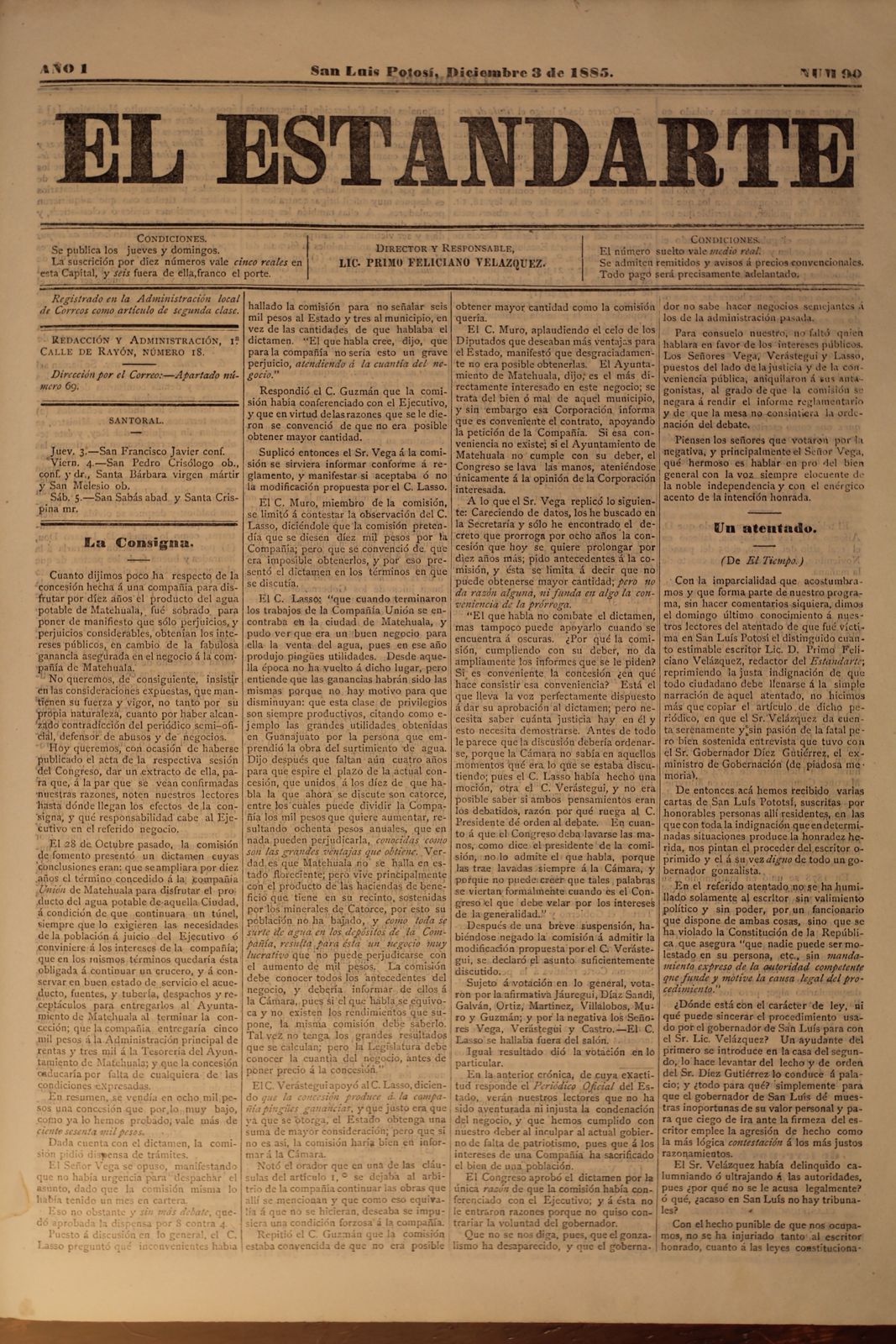
Replicable methodology
We document a workflow that digitizes and analyzes historical newspapers systematically, creating a protocol that can be reused across similar collections.
Directed photographic capture
- We photograph each sheet of the estandarte with balanced lighting.
- Color charts and rulers ensure consistent scale and chroma.
- We prioritize the document’s physical integrity throughout the capture.
Diagnosis and preservation
Once the digital cycle is complete, we will draft a conservation diagnosis with risk assessment and recommendations to safeguard the original piece and its reproductions.
Preprocessing pipeline
Captured images flow through a pipeline tailored for GLIMPSE. Each stage standardizes inputs and maximizes legibility.
Contrast adjustment
We normalize levels and tonal balance to enhance typography and emphasize the paper texture.
Contextual cropping
We remove outer borders and enforce consistent margins that facilitate downstream segmentation.
Correction and alignment
We rectify skew and deformation to deliver standardized pages ready for GLIMPSE ingestion.
Next steps
With the standardized corpus, we start GLIMPSE-assisted analysis to extract entities, editorial patterns, and temporal relationships. The insights will inform the conservation diagnosis and open new lines of inquiry for future newspaper collections.
Email the lab